
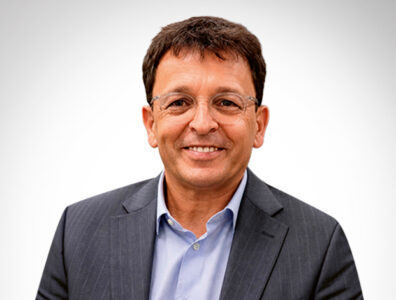
Paulo Pizarro, chairman and CEO of Novagest, talks to The Energy Year about the impact of Angola’s oil and gas investment cycle on business and the company’s measured expansion into new service verticals and target markets.
Novagest is an Angolan provider of catering, facilities management and associated support services for oil and gas and other sectors.
- Novagest sees investment activity rather than production volumes as the main driver of oilfield service demand, while diversification into mining and industrial clients is intended to reduce its dependence on Angola’s oil and gas cycle.
- The company is expanding from catering into facilities management and distribution, leveraging its existing logistics, food safety, quality-control and traceability capabilities to provide more integrated services.
- Novagest is strengthening its platform for growth through SAP, ISO certification and measurable sustainability initiatives, with consolidation in Angola preceding a more active push into regional markets including Namibia and Mozambique.
What is your outlook for Angola’s oil and gas sector and its impact on demand for your services?
Oil and gas remains our strongest sector and where we have our largest footprint. However, demand for our services will not increase simply because production levels rise; what matters most to us is the new investments taking place. When exploration activity increases, it creates opportunities regardless of whether discoveries are made.
Since Angola’s production is largely offshore in deepwater environments, for discoveries to be commercially viable, they need to be substantial. Even then, production could be many years away unless it is linked to existing infrastructure. For service providers like us, what creates work is drilling campaigns and development activities. Whether oil arrives or not is less important.
Historically, Novagest’s business has been almost entirely dependent on oil and gas, but we are now diversifying to other sectors and geographies. We do not want to rely on a single sector, and we are pursuing opportunities in other industries and regions, such as Namibia, where we are monitoring developments closely.
Can you outline the main priorities driving Novagest’s growth strategy?
Our strategy is to consolidate and expand. We continue to strengthen our position with premium oil and gas clients while also targeting mining and industrial companies, which have a large requirement for food delivery services as well as food safety and quality controls. Such companies have increasingly stringent sustainability standards, and we have started implementing an internal sustainability plan that we developed in 2025.
We have infrastructure, logistics and quality control systems that cover every step from the purchase of raw materials through to storage, transportation and meal preparation. This gives us a strong competitive position with clients that demand consistency and traceability.
To support these efforts, we established a facilities management division and have recruited an experienced leader. We have started participating in tenders and are confident of our chances because we are already providing similar services to some of our clients, including catering, housekeeping, laundry and maintenance services. The logical next step is to offer full facilities management services.
We are also expanding our distribution activities for clients who run their own cafeterias but purchase products from us. With our large warehouse in Viana and our logistics network covering Angola, we can supply products nationwide while maintaining quality control throughout the process.
What changes are you making within the company to support expansion?
We want to ensure our internal processes are fully prepared for growth into new industries and regional markets, and in this sense, one of our most important initiatives has been the implementation of SAP. Novagest has long been recognised as a leader in logistics and service delivery, but we felt that our back-office functions needed reinforcement and that we needed greater integration among HR, procurement, finance and IT systems.
Implementing SAP has been a major undertaking. The system went live in May 2026, and we expect it may take up to six months before we fully realise the benefits. It has been a challenging process, but we are optimistic that our efficiency, reporting and overall management will improve.
We also achieved ISO 9001 certification in December 2025. For us, this is not an endpoint, but rather the beginning of a process of continuous improvement. ISO 9001 is fundamentally about processes, consistency and organisation, and it will help our services become more consistent and competitive.
The next step is the implementation of ISO 22000, which focuses on food safety and is part of our efforts to create a strong foundation for growth as we look to markets such as Namibia and Mozambique. Our priority is to consolidate our operations in Angola, and then we will become much more active in pursuing international opportunities.
How are you incorporating sustainability and local content considerations into your operations?
Sustainability has become a key priority for us. We originally intended to begin implementation of our sustainability plan in 2025, but the ISO 9001 certification process demanded significant attention and, given the size and complexity of our organisation, it was difficult to pursue both initiatives simultaneously. We have more than 2,000 employees in eight provinces, which makes any company-wide transformation a substantial undertaking.
We started a structured implementation of the sustainability plan in 2026, with one major development being the issuing of a tender for integrated waste management services. We now have waste separation systems in place and a service provider that collects and recycles plastics, metals, glass, cardboard and other materials. In parallel, we have started monitoring and reducing food waste, water and energy usage, and consumption of single-use plastics. Accurate measurement is critical because it allows us to move from discussing intentions to quantifying our progress over time.
Eventually, we will publish a regular report documenting our achievements. Whether that becomes a full sustainability report or another form of disclosure remains to be seen, but the important thing is to show evidence of our performance. Many of our premium clients already ask about sustainability plans during tenders, and we want to be in a position to show measurable results, which will boost our competitiveness.
Source: Theenergyyear.com